

Comprehensive Private Investigation Services in Nashville: Hire the Best Private Investigator for Your Needs
Comprehensive Private Investigation Services in Nashville

The Dillon Agency focuses on delivering comprehensive private investigation services in Nashville that combine field surveillance, digital forensics, and legally defensible reporting to give clients discreet, admissible results. This article explains what “comprehensive” means in practice: the full spectrum from background checks and infidelity work to mobile forensics, missing-persons investigations, and litigation support, and it explains how evidence is collected, preserved, and presented for legal use. Readers will learn which services match common needs, what typically drives investigation cost, why local expertise and technical capability matter, and what to expect from a confidential consultation and case workflow. The guide emphasizes discreet investigations in Middle Tennessee, points out common evidentiary outputs (photos, video, GPS logs, forensic images), and clarifies how investigators protect chain of custody and client privacy. After outlining services and pricing guidance, the article compares investigative methods, offers practical checklists for hiring a PI in Nashville, and closes with next-step expectations for clients considering an engagement.
Ensuring that all collected evidence, especially electronic information, is handled in strict compliance with legal standards is fundamental to effective litigation support.
Litigation Support: Legal Handling of Electronic Evidence
used as evidence, there is an established set of rules and procedures that exists. This document first introduces the litigation support industry and all the various support structures that exist to ensure that electronic information is handled in compliance with the law when used as evidence.
Litigation support: complying with the law when handling electronic information during legal proceedings, 2015
What Private Investigation Services Does The Dillon Agency Offer in Nashville?
Private investigation covers a range of investigative and forensic services designed to discover facts, collect evidence, and support legal or personal decision-making in Nashville. The Dillon Agency provides service buckets that include background checks, infidelity investigations, employee theft probes, family law and child custody support, litigation support, mobile forensics, missing persons work, and surveillance operations. Each service is tailored to produce court-admissible deliverables such as surveillance video, investigative reports, GPS tracking logs, and forensic images, with processes designed to maintain confidentiality and chain-of-custody integrity. Below is a concise table that clarifies what each service includes and the typical court-admissible outputs clients can expect, followed by a short action note about consultations and next steps.
Service
What It Includes
Court-Admissible Outputs
Background Checks
Criminal/civil records review, identity verification, employment and education checks
Certified records extracts, investigator report, exhibit labels
Infidelity Investigations
Covert surveillance, timestamped photos/video, corroborating digital evidence
Time-stamped video, photographic exhibits, sworn investigator affidavit
Employee Theft Investigations
Workplace surveillance, transaction audits, witness interviews
Video/audio exhibits, audit logs, investigator chronology
Mobile Forensics
Device imaging, data recovery, analysis of messages and metadata
Forensic images, hash logs, chain-of-custody documentation
Missing Persons
Skip tracing, public records, field interviews, coordination with authorities
Trace reports, location logs, verified identity evidence
Litigation Support
Evidence collection, witness interviews, trial exhibits, expert summaries
Organized exhibit bundles, sworn reports, consultant notes
Surveillance Services
Real-time monitoring, stationary and vehicular surveillance
GPS tracking logs, surveillance video, investigator logs
This table outlines the primary deliverables so you understand how each service maps to legal needs and courtroom standards. For clients who prefer to discuss needs before committing, The Dillon Agency offers free, confidential consultations where investigators explain probable outputs and next steps without obligation.
Background Checks, Infidelity, and Employee Theft Investigations
Background checks, infidelity investigations, and employee-theft probes each rely on different investigative mechanisms but share the same goal: verifiable facts packaged for decision-making or legal use. Background checks combine public-record searches, employment verification, and identity corroboration to build a factual profile for hiring, litigation, or personal safety. Infidelity investigations rely primarily on covert surveillance and corroborating digital forensics to document behavior while avoiding entrapment or illegal activity. Employee-theft investigations blend workplace observation, discrete transactional review, and witness interviews to identify patterns and preserve admissible exhibits. What investigators gather typically includes timestamped photos/video, transaction logs, witness statements, and certified record extracts, all compiled into a chronological investigative report that supports client objectives and legal processes.
- Intro to what these services gather and how evidence is used in decisions and litigation.
- Examples emphasize legal boundaries and ethical considerations to avoid unlawful collection.
- Note on how evidence transitions into litigation support when needed, with chain-of-custody maintained.
This combination of methods and deliverables gives clients clear, actionable evidence while preserving legal admissibility and confidentiality for possible courtroom use.
Mobile Forensics, Surveillance, and Missing Persons Services
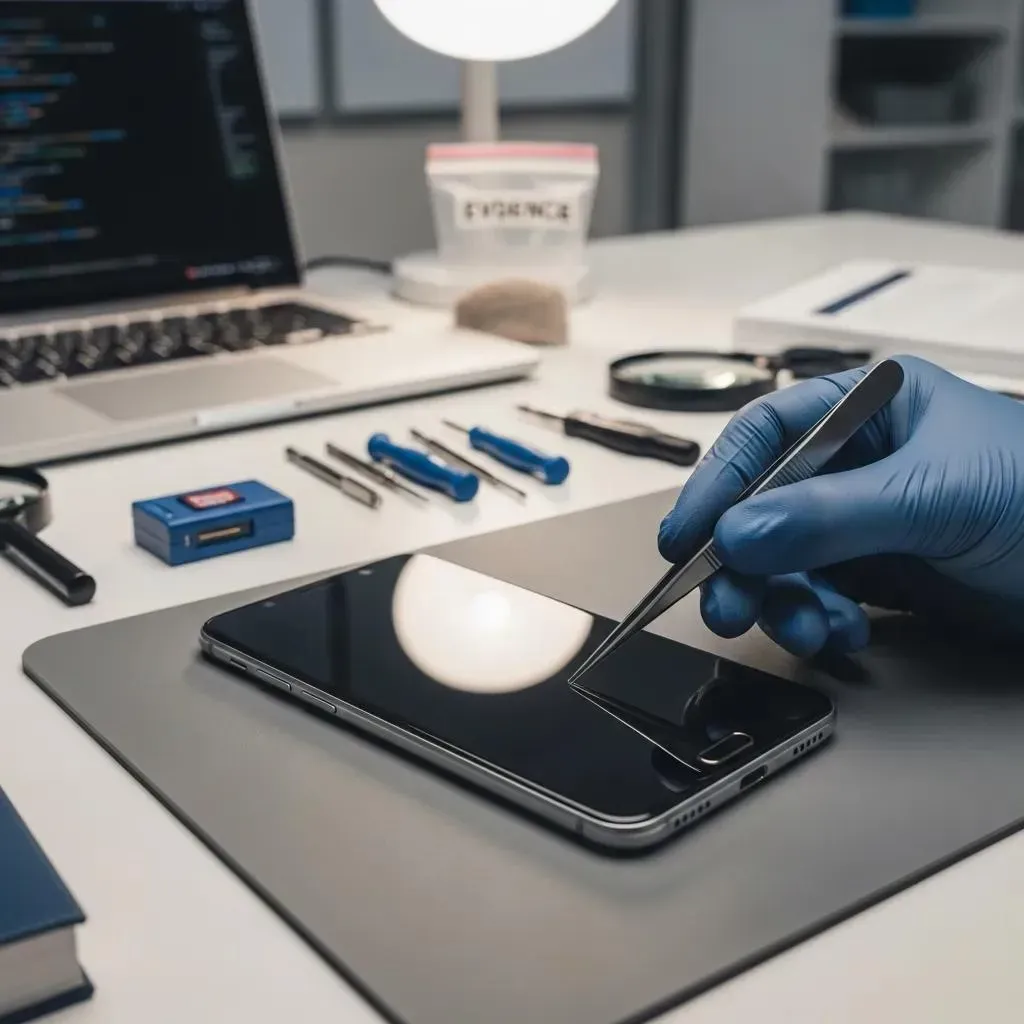
Mobile forensics begins with forensic imaging of devices to create a bit-for-bit copy that preserves metadata and message histories; analysts then extract relevant artifacts under documented chain-of-custody procedures.
The complexities of digital forensics, particularly in cloud environments, underscore the critical need for robust acquisition and chain-of-custody procedures to ensure evidence integrity.
Cloud Digital Forensics: Evidence Acquisition & Admissibility
Digital forensics difficulties in cloud computing comprise acquisition of remote data, chain of custody, distributed and elastic data, big data volumes, and ownership. In the literature, there are many schemes that deal with these issues. In 2013, Hou et al. proposed a scheme to verify data authenticity and integrity in server-aided confidential forensic investigation. The authenticity and integrity are two essential requirements for the evidence admitted in court.
Digital forensics evidence acquisition and chain of custody in cloud computing, HK Aslan, 2015
Surveillance employs trained operatives using vehicular, foot, and stationary tactics with modern tools such as real-time monitoring and hidden cameras to capture admissible photographic and video evidence. Missing-persons engagements use skip-tracing tools, public-record analysis, and field interviews to develop leads and verify identities, often coordinating with authorities when circumstances require. Together, these techniques produce forensic images, GPS logs, and time-stamped media that can support legal filings or safe reunification.
- Intro explaining the technical steps and why they matter for admissibility and locating subjects.
- The list below outlines core activities performed during these service types.
- Device Imaging and Analysis: Create a forensic image and extract messages, call logs, and location data.
- Covert Surveillance: Conduct real-time monitoring with documented timestamps and metadata preservation.
- Skip Tracing: Use public records, databases, and field interviews to generate verifiable leads.
Each activity generates artifacts—images, logs, and reports—that investigators preserve and present in a way suitable for courts or legal counsel, maintaining confidentiality throughout the process.
How Much Does Hiring a Private Investigator in Nashville Cost?
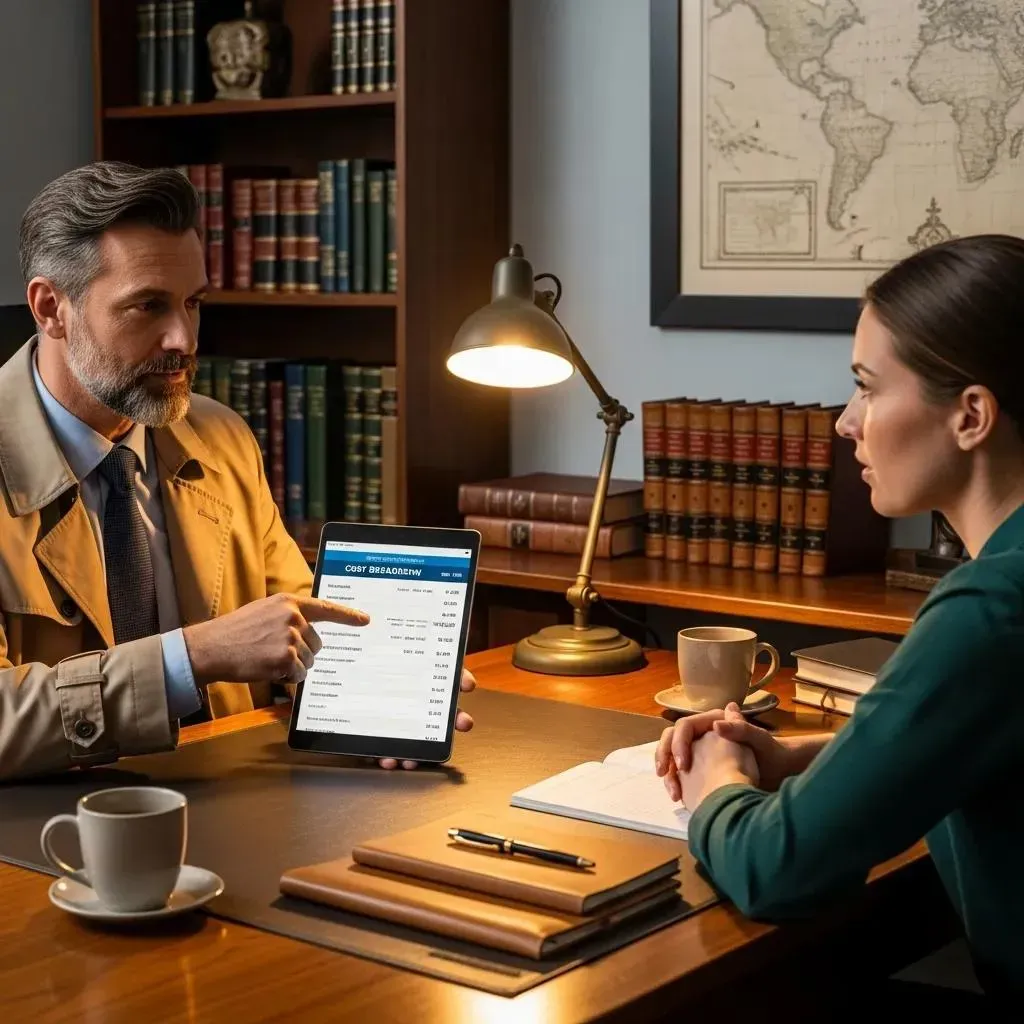
Cost for private investigation in Nashville varies by case complexity, required technology, and time on task, and common pricing structures include hourly rates for surveillance and flat fees for defined deliverables. A clear pricing comparison helps set expectations before engagement and reduces surprise expenses; the table below provides typical ranges and duration notes for common investigation types so prospective clients can see realistic budgets for planning. The Dillon Agency emphasizes transparent estimates through free, confidential consultations where scope and cost drivers are discussed up front to produce an informed fee estimate.
Investigation Type
Typical Cost Range
Typical Duration / Notes
Short background check
$200 - $600
1–3 days depending on records needed
Infidelity/surveillance case
$75 - $150 per hour
Often 5–30 hours; total varies with surveillance needs
Employee theft investigation
$500 - $2,500
Depends on workplace access and audit depth
Mobile forensics
$300 - $1,200
Imaging and basic analysis typically 1–5 days
Missing persons / skip trace
$250 - $1,000+
Scope varies; may involve multi-day field work
Litigation support
$500 - $3,000+
Includes document prep and trial exhibits as needed
This table provides ballpark figures; final pricing depends on variables such as travel, specialized lab time, and legal preparation. The Dillon Agency’s approach includes an initial free consultation to clarify scope, discuss likely costs, and propose a cost-effective plan tailored to the client’s objectives.
Factors Influencing Private Investigation Nashville Cost
Several predictable factors influence total cost: investigator hourly rates, surveillance hours, travel and logistics, equipment and lab fees (mobile forensics software and hardware), and administrative time for report preparation and legal coordination. Hourly work such as surveillance and field interviews can accumulate quickly if the target is mobile or requires repeated observation, while flat-fee assignments such as a targeted background check are easier to estimate. Technology costs include forensic lab analysis, licensing for forensic tools, and secure storage or redaction services for sensitive exhibits. Legal and logistical costs—court preparation, potential expert testimony, and coordination with attorneys—also add to total project budget when evidence must be prepared for trial. Understanding these drivers helps clients make informed decisions about scope and return on investment.
- List of primary cost drivers explained so readers can anticipate where expenses arise.
- Examples show how a multi-day surveillance assignment differs in cost basis from a single forensic image.
- Time on Task: Extended surveillance or multiple travel days increase hourly totals.
- Technical Work: Forensic imaging and lab work require licensed tools and specialist hours.
- Legal Prep: Court-admissible reporting and potential testimony add preparation time.
Careful scoping during the confidential consultation reduces uncertainty and allows investigators to recommend cost-saving strategies while preserving evidentiary value.
Typical Pricing Ranges for Common Investigation Types
Typical pricing for representative scenarios helps prospective clients match needs to budgets and understand why an initial consult is essential to create an accurate estimate. For example, a focused background check for litigation might fall into a lower flat-fee bracket, whereas an infidelity investigation requiring multiple nights of surveillance will be priced hourly and could require a larger budget. Sample scenarios clarify expected time and cost allocation while underscoring the importance of technology and travel in final pricing. The table above summarizes typical ranges; the following sample scenarios illustrate real-world expectations and planning parameters.
- Scenario 1: A two-night infidelity surveillance requiring 12 hours of coverage per night might be estimated by hourly rate and include photographic/video deliverables.
- Scenario 2: A mobile-forensics extraction for a single smartphone with message recovery and a basic report typically fits within the mobile forensics range and includes chain-of-custody documentation.
Prospective clients should use the free, confidential consultation to review scenario specifics and receive a written estimate tied to deliverables and timelines.
Why Choose The Dillon Agency as Your Nashville Detective Agency?
Selecting a detective agency hinges on demonstrable local knowledge, technical capability, legal defensibility of evidence, and strict confidentiality practices; The Dillon Agency emphasizes those differentiators to build client confidence. Investigators on the team have backgrounds in law enforcement, military intelligence, and surveillance, which provides tactical and procedural rigor when conducting fieldwork and forensic analysis. The firm combines local Middle Tennessee expertise—covering Nashville, Franklin, Dickson, and Columbia—with advanced technologies like real-time surveillance, hidden cameras, GPS monitoring, and digital forensics, all while guaranteeing confidentiality and offering a free, confidential consultation to discuss the case discreetly. The short table below summarizes core UVPs and what they mean for clients seeking a Nashville private investigator.
Expertise of Licensed Investigators with Local Nashville Knowledge
Licensed investigators with prior law enforcement and intelligence experience bring investigative tradecraft, evidence-handling discipline, and courtroom awareness that improve outcomes. Local knowledge of Middle Tennessee records systems, courthouse procedures, and community networks accelerates searches and reduces wasted travel or research time; that local access often yields faster results for time-sensitive matters. Paul Dillon is mentioned in client testimonials as a lead investigator and is part of the agency’s local presence and case leadership, which helps coordinate field teams and forensic analysts effectively. This combination of operational experience and regional familiarity allows investigators to scope cases realistically and present evidence in ways attorneys and decision-makers can rely on.
- Short bio mention of Paul Dillon and how local expertise speeds investigative timelines and evidence access.
- Transition into technology and confidentiality explaining how procedural safeguards support legal admissibility.
Use of Advanced Technology and Guarantee of Confidentiality
Advanced technologies—real-time surveillance systems, hidden cameras, GPS monitoring, and forensic software—enable thorough evidence capture without sacrificing legal defensibility when used within procedural controls. The agency emphasizes chain-of-custody practices, secure storage of digital exhibits, and careful metadata preservation so that video, images, GPS logs, and forensic images remain admissible in court. Confidentiality safeguards include private consultations, discrete field operations, and secure report delivery, ensuring that sensitive client information is restricted to necessary personnel. Clients benefit from having both technical capability and operational discretion combined, which increases the chances of obtaining clear, usable proof while protecting client privacy.
- List of technologies and privacy practices shows how tools are applied and why they matter for admissibility and discretion.
- Closing sentence leads into procedural methods for collecting and preserving evidence.
How Does The Dillon Agency Conduct Discreet and Court-Admissible Investigations?
Conducting discreet and court-admissible investigations requires disciplined processes: clear evidence collection protocols, documented chain-of-custody, validated forensic methods, and attorney collaboration when legal proceedings are possible. Investigations begin with an evidence plan that maps desired outputs—photographs, video, forensic images, GPS logs—and assigns collection methods and custody steps to ensure admissibility. The EAV table below shows common evidence types, their collection methods, and admissibility notes to clarify how procedural choices influence legal defensibility. Strong procedures not only protect the client and the investigation but also enhance the value of evidence when presented to courts or opposing counsel.
Evidence Type
Collection Method
Admissibility Notes
Surveillance video
Time-stamped recording with metadata retention
Preserve original files and camera logs for authenticity
Photographs
High-resolution images with witness/investigator logs
Use exhibit labeling and corroborating timestamps
Forensic device image
Bit-for-bit imaging with hash verification
Maintain hash logs and lab chain-of-custody records
GPS tracking logs
Secure export with timestamped route data
Ensure legal authorization and documented device handling
This table clarifies how each evidence form is gathered and documented so it can withstand legal scrutiny; maintaining metadata, hash verification, and exhibit labeling are essential to preserve admissibility.
Surveillance Techniques and Evidence Collection Methods
Surveillance operations use a blend of vehicular, foot, and stationary techniques tailored to the subject’s patterns, and all observations are logged with precise timestamps and location data to support later analysis. Photographic and video standards require sufficient resolution, clear metadata retention, and redundant capture when possible to avoid challenges about authenticity or continuity. Investigators use real-time monitoring tools sparingly and document chain-of-custody from capture through storage and reporting to prevent gaps that could weaken evidentiary value. Properly documented surveillance logs, corroborated by time-stamped media and investigator affidavits, create a robust evidentiary package for clients and counsel preparing legal action.
The following checklist summarizes documentation steps used to strengthen evidentiary weight.
- Timestamped Media Capture: Record exact times and preserve original files for verification.
- Redundant Documentation: Use multiple devices or observers to corroborate critical events.
- Investigator Logs: Maintain detailed activity logs that track chain-of-custody and actions.
These procedures reduce evidentiary risk and create a clear record for legal review, which ties directly to how cases are later presented in litigation support.
Ensuring Accuracy and Legal Admissibility of Evidence
Accuracy and admissibility hinge on strict chain-of-custody protocols, validated forensic processes, and collaboration with attorneys to align collection with legal standards.
The inherent volatility of digital evidence makes a rigorous chain of custody indispensable for its acceptance in court, moving beyond traditional paper-based methods.
Digital Evidence Integrity & Chain of Custody for Court
Since digital evidence is complex, diffuse, volatile and can be accidentally or improperly modified after acquired, the chain of custody must ensure that collected evidence can be accepted as truthful by the court. In this scenario, traditional paper-based chain of custody is inefficient and cannot guarantee that the forensic processes follow legal and technical principles in an electronic society.
Improving chain of custody in forensic investigation of electronic digital systems, G Giova, 2011
Forensic imaging includes hash verification and documented lab procedures to show that digital copies are authentic and unaltered, while physical exhibits receive sealed packaging and labeled custody forms. Investigators produce organized, chronological reports that include exhibit lists, metadata summaries, and sworn statements when necessary to support court presentation. Regular consultation with legal counsel during complex investigations helps ensure evidence is collected under appropriate permissions and prepared in a format usable for depositions or trial testimony.
- Hash Verification: Forensic images include hash logs to prove file integrity.
- Sealed Evidence Handling: Physical and digital exhibits are sealed and labeled for custody tracking.
- Attorney Coordination: Counsel review helps tailor evidence collection to legal strategy.
These safeguards maximize the evidentiary weight of findings and minimize challenges during legal proceedings.
What Should You Expect When Hiring a Private Investigator in Nashville?
When engaging a private investigator in Nashville, expect a confidential intake, a scoped investigation plan that defines objectives and deliverables, discreet execution using appropriate techniques, and clear reporting that supports decision-making or legal action. The process begins with a free, confidential consultation to gather facts and set priorities; investigators then propose a scope and cost estimate that aligns with client goals and legal boundaries. Fieldwork and technical analysis follow, with routine status updates as agreed, culminating in a written investigative report that organizes exhibits, chronology, and recommendations for next steps. Clients should also expect options for follow-up services, litigation support, or expert testimony if evidence needs to be defended in court.
- The numbered steps below provide a clear view of the typical workflow and timing expectations.
- Confidential Consultation: Discuss objectives and provide initial documentation in a private setting.
- Case Scoping and Estimate: Receive a written plan and cost estimate outlining methods and deliverables.
- Investigation and Documentation: Fieldwork and technical analysis produce media, logs, and reports.
- Reporting and Follow-Up: Receive organized exhibits and recommendations, with options for legal support.
This stepwise workflow clarifies responsibilities and timing so clients can plan for outcomes and next steps with confidence, including the possibility of litigation support if evidence requires court presentation.
The Confidential Consultation and Investigation Process
The confidential consultation is the primary moment to align goals, share known facts, and establish boundaries for lawful evidence-gathering; investigators use that intake to create a focused evidence plan and estimate. During the consult, clients should bring any existing documentation—communications, timelines, or records—that can accelerate research and reduce duplication of effort. Investigators explain legal and ethical limits during the intake and discuss likely timelines and deliverables, such as the types of reports and media the client will receive. This preparation allows the investigative team to deploy efficiently and to structure the chain-of-custody and reporting formats to match legal needs.
- Intro paragraph details what to bring to a consult and how confidentiality is preserved.
- The brief checklist below outlines typical consult outcomes and next steps.
- Documentation Review: Provide any documents or examples that help define the scope.
- Scope Agreement: Agree on objectives, methods, and an estimate for costs and timeline.
- Deployment Plan: Investigators outline initial tasks and expected checkpoints.
A well-structured consultation reduces uncertainty and ensures the investigation proceeds on a defensible, cost-aware path.
Client Support, Reporting, and Case Follow-Up
Clients receive final investigative reports in secure formats such as PDF bundles or encrypted deliveries, with clear exhibit labels, chronological timelines, and summaries designed for review by attorneys and decision-makers. Regular checkpoints during the investigation provide status updates and permit clients to adjust scope if new information arises; post-case follow-up includes additional assistance such as exhibit preparation for court or coordination for expert testimony when necessary. Reporting often includes a narrative summary, labeled photographic/video exhibits, GPS and log exports, and a custody record that documents every transfer of evidence. These structured deliverables support next steps, whether pursuing legal action, implementing HR decisions, or closing a personal matter.
- Intro paragraph describes report formats and follow-up support options.
- The short bulleted list below shows typical report contents.
- Chronological Narrative: A clear timeline of events and investigative actions.
- Exhibit Bundle: Labeled photos, videos, and forensic exports with metadata.
- Custody Records: Chain-of-custody forms and lab verification where applicable.
These elements ensure clients have defensible, well-organized materials to support legal or administrative decisions and to request additional services if evidence requires further development.
Where Does The Dillon Agency Provide Private Investigation Services in Middle Tennessee?
Coverage in Middle Tennessee focuses on Nashville and surrounding communities where local knowledge and rapid deployment are valuable for time-sensitive matters. The Dillon Agency serves core areas including Nashville, Franklin, Dickson, and Columbia, with the ability to reach surrounding municipalities and rural communities across the region; local courthouse familiarity and regional records access shorten research cycles and enable faster evidence collection. Clients in core service areas typically receive faster response times and reduced travel costs, while engagements farther afield are scoped to include reasonable travel and logistics estimates. The following list clarifies coverage priorities and deployment considerations, followed by a short note on how local expertise reduces time and cost in investigations.
- Intro paragraph explains geographic focus and how regional knowledge impacts deployment.
- The list below enumerates primary service locations and operational notes.
- Nashville: Core operations and quickest deployment for urban surveillance and courthouse access.
- Franklin: Rapid response for family law and local records work.
- Dickson & Columbia: Regional coverage with established local contacts and courthouse familiarity.
Local presence and Middle Tennessee expertise allow investigators to draw on known procedural routes, county records processes, and community contacts to streamline investigations and limit unnecessary delays.
Coverage Areas Including Franklin, Dickson, Columbia, and Surrounding Cities
Explicit coverage includes Nashville, Franklin, Dickson, and Columbia, with operational capacity to handle nearby towns as the case requires; rapid deployment is most feasible within the core service radius. Investigators prioritize quick-response areas for matters such as time-sensitive surveillance, safety concerns, or urgent missing-persons leads, and they clearly explain any travel-related scheduling or cost implications during the free consultation. For clients outside core zones, The Dillon Agency provides upfront travel estimates and proposes efficient strategies such as targeted records research or local collaborations to manage costs. This geographic clarity helps clients set expectations for timelines and budget when initiating an engagement.
- Intro paragraph details coverage strategy and travel considerations.
- The short summary sentence connects to the benefits of local expertise described next.
Benefits of Local Expertise in Middle Tennessee Investigations
Local expertise yields practical advantages: quicker access to county records, familiarity with local courthouse calendars and filing procedures, and established relationships that can accelerate background checks or service of process. Investigators who know neighborhood patterns, traffic flows, and business hours can plan surveillance with higher success rates and fewer wasted hours. In many cases, local knowledge reduces overall investigation time and cost by avoiding unnecessary travel and focusing efforts where the evidence is most likely to appear. Clients gain both efficiency and improved evidentiary outcomes when investigations are led by practitioners steeped in Middle Tennessee operational realities.
- Intro paragraph explains tactical advantages and gives brief examples of time and cost savings.
- Final sentence reinforces the recommendation to discuss location-specific deployment during the confidential consultation and to plan for efficient, legally defensible evidence collection.
For anyone ready to move from questions to action, scheduling a confidential consultation is the next sensible step to receive a scoped plan, transparent cost estimate, and a discussion of how discreet, court-admissible evidence will be collected and delivered. Learn more about our private investigation services here.